Bio Data for Marriage How to Create the Perfect Marriage Biodata
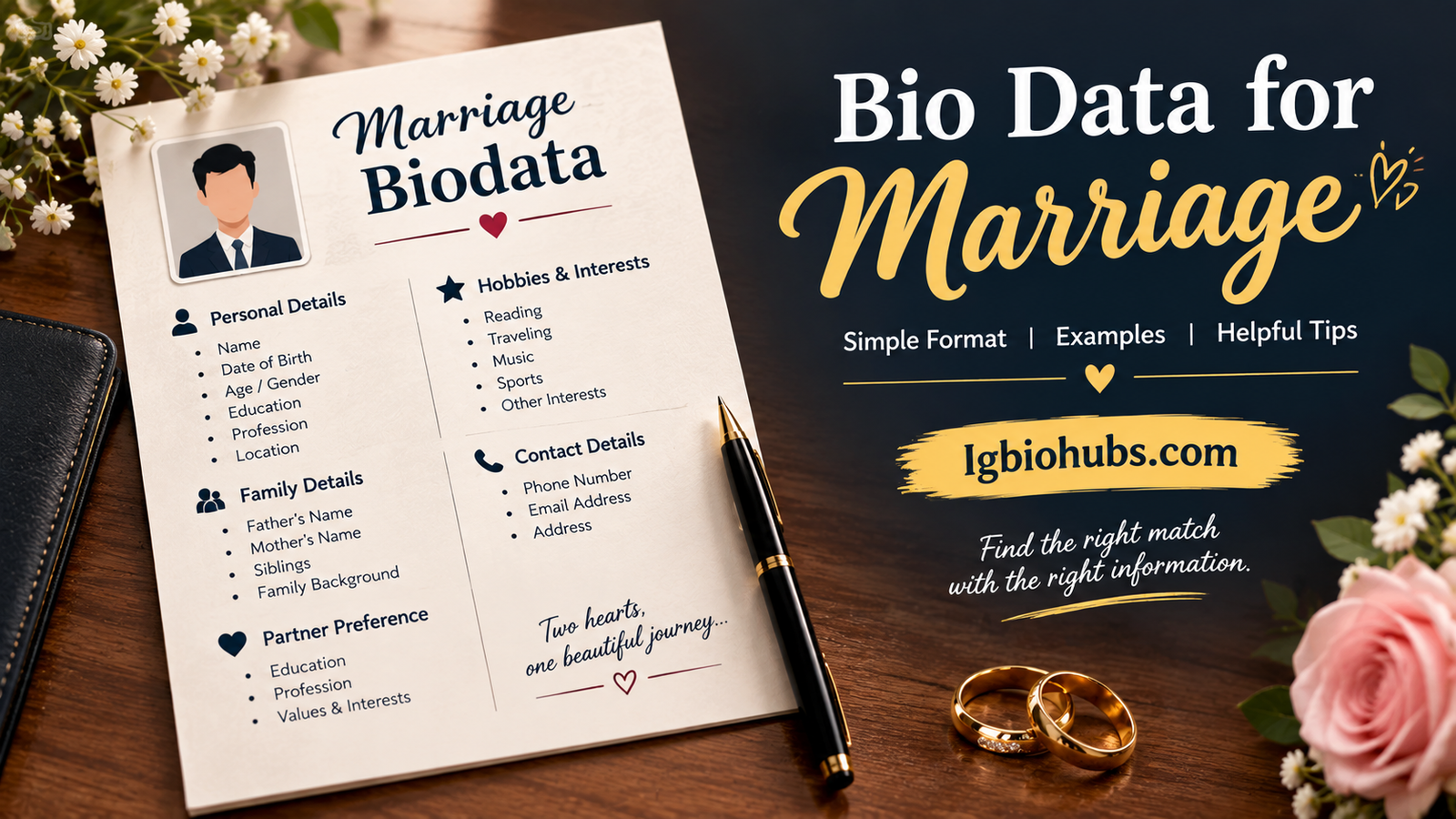
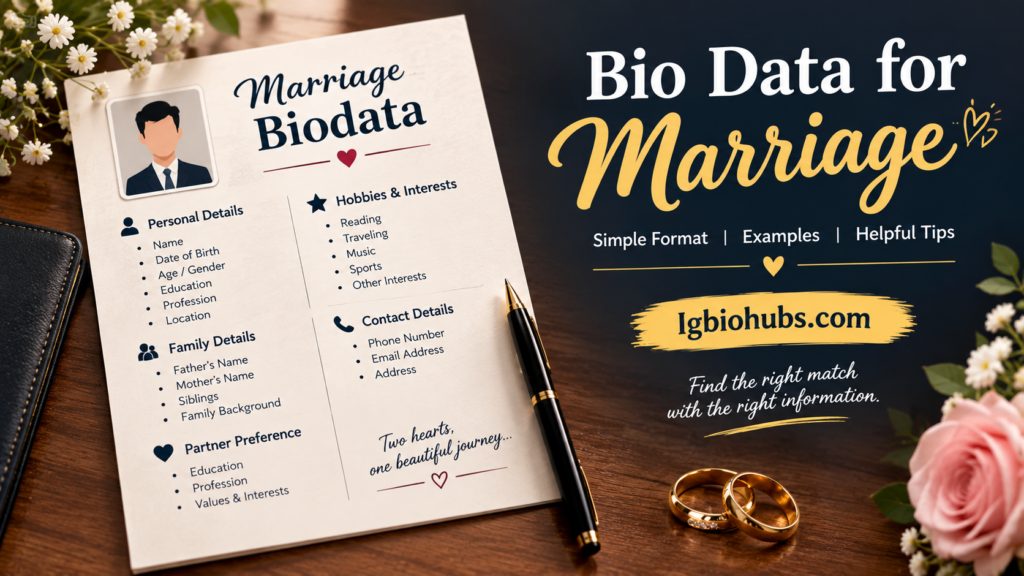
Bio data for marriage is a simple document that introduces a person to a potential partner and their family.
It usually includes basic details such as name, age, education, profession, family background, hobbies, interests, and contact information.
A good marriage biodata should be clear, respectful, and easy to read.
You can also include a recent photograph and mention important preferences, such as the desired partner’s education, values, or location.
Keep the information honest and avoid adding unnecessary personal details.
Whether you are preparing biodata for a boy or girl, a clean format with organized headings can make a positive first impression and help families understand each other better.
Table of Contents
Quick Table
| Section | What to Include |
|---|---|
| Name | Full name |
| Age | Current age |
| Date of Birth | Day, month, and year |
| Education | Degree or qualification |
| Profession | Job, business, or occupation |
| Location | City and country |
| Family Details | Parents and siblings |
| Religion | Religion or faith, if relevant |
| Hobbies | Interests and activities |
| Partner Preference | Desired qualities or expectations |
| Contact Details | Phone number or email |
| Photograph | Recent and clear photo |
When a Simple Biodata Goes Wrong
My cousin called me at 11 PM last year, close to panic. “Bhai, my mother needs my biodata by tomorrow morning.
A family is coming to meet us this weekend. What do I even write?”
I asked to see what she had. It was a Word file with the Times New Roman font, a passport photo stretched to fit, and one line at the bottom that said “Looking for a good and religious partner.”
The whole thing was crammed onto a page with three different font sizes.
I’ve helped a few friends and family members put these together over the years, and I’ve rewritten my own three times.
Most people treat a marriage biodata like a form to fill in. In practice, it’s the first impression a stranger’s family gets of you, and they often read it in under a minute.
Here’s what I’ve learned about making one that works.
What a marriage biodata actually is
It’s a short document, ideally one page, that gives a prospective match and their family a quick, honest picture of who you are: your background, education, work, family, and what you’re looking for.
It gets passed around on WhatsApp, printed out at matchmakers’ offices, and shown to relatives. So it has to be clear, easy to read on a phone, and safe to share with people you haven’t met yet.
My first attempt was a mess
For my first biodata, I wrote everything. Full address, both parents’ phone numbers, my CNIC-style details, my grandfather’s profession, every school I’d attended since kindergarten. It ran to nearly two pages.
A family friend, who’d been arranging matches for decades, looked at it and laughed kindly. “Nobody needs this much.
And you’ve just handed your home address to a hundred strangers.”
That last part stuck with me. Once a biodata goes on WhatsApp, you lose control of where it ends up. Forwarded messages travel far. Since then, I’ve followed one rule: include only what someone needs to decide whether to take the next step.
What to include
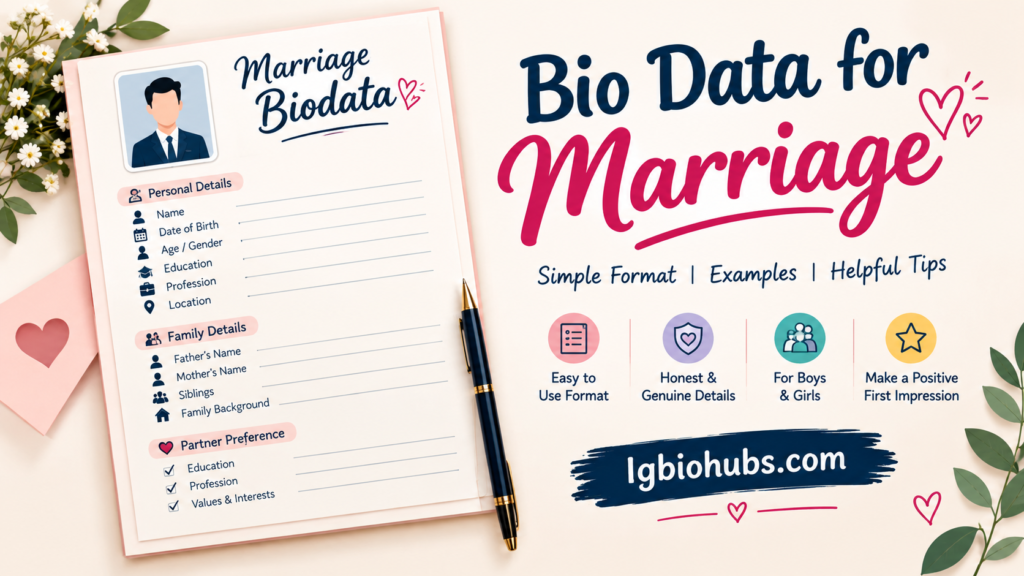
Here’s the structure I now recommend. It works whether you’re writing for yourself, a sibling, or a friend.
1. Personal details
- Full name (or just first name if privacy matters to you)
- Age or date of birth
- Height
- Marital status (never married, divorced, widowed)
- Religion, sect, or community, if it matters to your family
- City you currently live in
2. Education and career
- Highest qualification and the institution
- Current job title and company type (you don’t need the exact employer)
- Income range, only if your family expects it. Many people now skip exact figures and say something like “well-settled.”
3. Family background
- Father’s and mother’s occupations
- Number of siblings, and whether they’re married or studying
- Family type: joint or nuclear
4. A short “about me” paragraph
This is the part most people get wrong, so I’ll come back to it.
5. What you’re looking for
Two or three honest lines. Not a wish list.
6. Contact
A parent’s or guardian’s number is fine. Your personal phone doesn’t need to be on there.
The “about me” paragraph makes the difference
Compare these two:
“I am a simple, down-to-earth person who believes in family values and looking for a understanding partner.”
Every biodata has that sentence. It tells the reader nothing.
Now this one, which I helped a friend rewrite:
“I work as a software tester, and most weekends you’ll find me either cooking something experimental or dragging my brother to a cricket match. I’m close to my family, I like quiet evenings more than big parties, and I’m looking for someone who’s comfortable with that.”
The second one sounds like an actual person. The family reading it can picture a real human, and that’s what starts a conversation.
Here’s how I write this section with people now:
- Ask them what they do on a normal Sunday.
- Ask what their friends would say about them.
- Pick one or two real details from the answers.
- Write it in plain sentences, the way you’d say it out loud.
That usually gets you a paragraph better than anything you’d invent by trying to sound impressive.
Photos: the mistake I see most often
Photos cause more trouble than any other part of the biodata.
I’ve seen heavily filtered selfies, group photos where you can’t tell who the person is, cropped wedding pictures with someone else’s shoulder still visible, and blurry images taken from a distance.
What works:
- One clear, recent, well-lit photo of your face and upper body
- Natural expression, simple clothes
- Optionally a second, full-length photo
- No sunglasses, no heavy filters
One more thing, especially for women: think carefully about whether the photo should go on a document that will be forwarded.
Some families prefer to share photos only after an initial conversation. There’s no right answer, but decide on purpose rather than by default.
Making it look good without hiring a designer
You don’t need fancy software. These are the tools I’ve actually used:
Canva has free biodata templates. Search “marriage biodata” and pick a clean one. Avoid the ones with heavy floral borders and five different fonts, because they make the text harder to read.
Microsoft Word or Google Docs are fine if you keep the layout simple. A two-column table, one font, and clear headings are all you need.
Google Drive or your phone’s “Save as PDF” finishes the job. Always send the PDF, not the Word file. Word files can shift layout on different phones and can be edited by anyone.
A quick check I do every time: open the finished PDF on my phone, not just the laptop. If I have to pinch and zoom to read it, it’s too small. Most people will read it on WhatsApp on a phone screen.
A simple template you can copy
Here’s a layout that’s worked for people I know. Change the details to fit your own situation:
Name: [First name / full name]
Date of birth / Age:
Height:
Marital status:
Education:
Profession:
Location:
Family: Father is a retired [occupation]. Mother is a [occupation/homemaker]. Two siblings, one married, one studying.
About me: Two or three natural sentences about your work, interests, and personality.
Looking for: Two or three lines about the kind of person and life you’re hoping for.
Contact: [Guardian’s name and number]
Mistakes to avoid
Sharing too much personal information. Skip your ID numbers, exact home address, and financial details. You can share those later, once you’ve had a real conversation with the family.
Exaggerating. I once knew someone who listed himself as “5’10”.” When the families met, it was obvious he wasn’t. The mismatch created more awkwardness than the actual height ever would have. Honesty at this stage saves a lot of embarrassment later.
Writing an impossible wish list. “Must be fair, tall, highly educated, from a wealthy family, and must love travelling” reads as a demand, not a preference. Keep the “looking for” section short and focus on values and lifestyle.
Leaving out the important stuff. If you’re divorced, have children, or live abroad, say so clearly. Hiding it doesn’t help anyone and usually comes out anyway.
Typos and inconsistent formatting. It sounds minor, but a carelessly written document makes people wonder how much care went into everything else. Ask a friend to proofread it.
Sending it to everyone. I’ve seen biodatas end up in group chats with hundreds of people. Send it to people you trust, and ask them to check with you before passing it on.
Staying safe while sharing it
Since these documents get forwarded, a few habits help:
- Use a guardian’s phone number rather than your own.
- Avoid putting your workplace’s exact name and location together.
- Don’t include a full address. City and area are enough.
- If you’re using matrimonial websites or apps, read their privacy settings before uploading anything.
- Meet families in public places or with relatives present for the first few meetings.
What happened with my cousin
We rewrote her biodata that night. We cut it down to one page, replaced the generic line with two sentences about her love of baking and her work as a teacher, swapped the stretched photo for a clear one, and turned it into a clean PDF on Canva.
The family who came that weekend told her mother afterward that the biodata was what made them curious. “It sounded like a real person,” they said.
That’s really the whole lesson. A good biodata isn’t a list of achievements. It’s a short, honest introduction that makes someone want to meet you.
FAQ’s
What is a bio data for marriage?
A bio data for marriage is a document that shares important personal, educational, professional, and family information with a potential partner or their family.
What details should be included in marriage biodata?
You can include your name, age, date of birth, education, profession, location, family background, hobbies, interests, and partner preferences.
Should a photograph be included in marriage biodata?
A recent and clear photograph can be included if you are comfortable sharing one. Choose a simple, appropriate photo that represents you naturally.
How long should marriage biodata be?
One or two pages are usually enough. Keep the information organized, easy to read, and focused on details that are relevant to marriage.
Can I customize my marriage biodata?
Yes. You can customize the format, design, headings, and information according to your personality, family preferences, and the type of matrimonial introduction you want to create.
Conclusion
Creating a bio data for marriage does not have to be complicated.
A well-organized biodata can provide a clear introduction and make it easier for families or potential partners to understand important details about you.
Start with basic information such as your name, age, education, profession, and location.
Then add relevant family details, hobbies, interests, and partner preferences where appropriate.
The best marriage biodata is honest, simple, and easy to read. Avoid adding unnecessary information or making unrealistic claims.
A clean layout with clear headings can also make your biodata look more professional. If you choose to include a photograph, use a recent and suitable picture.
Whether you are preparing biodata for yourself, a family member, or a matrimonial introduction, focus on presenting genuine information in a respectful way.
You can also update the document whenever your education, profession, location, or preferences change.
With the right details and a simple format, your marriage biodata can serve as a useful first introduction while leaving room for meaningful conversations and further understanding.